
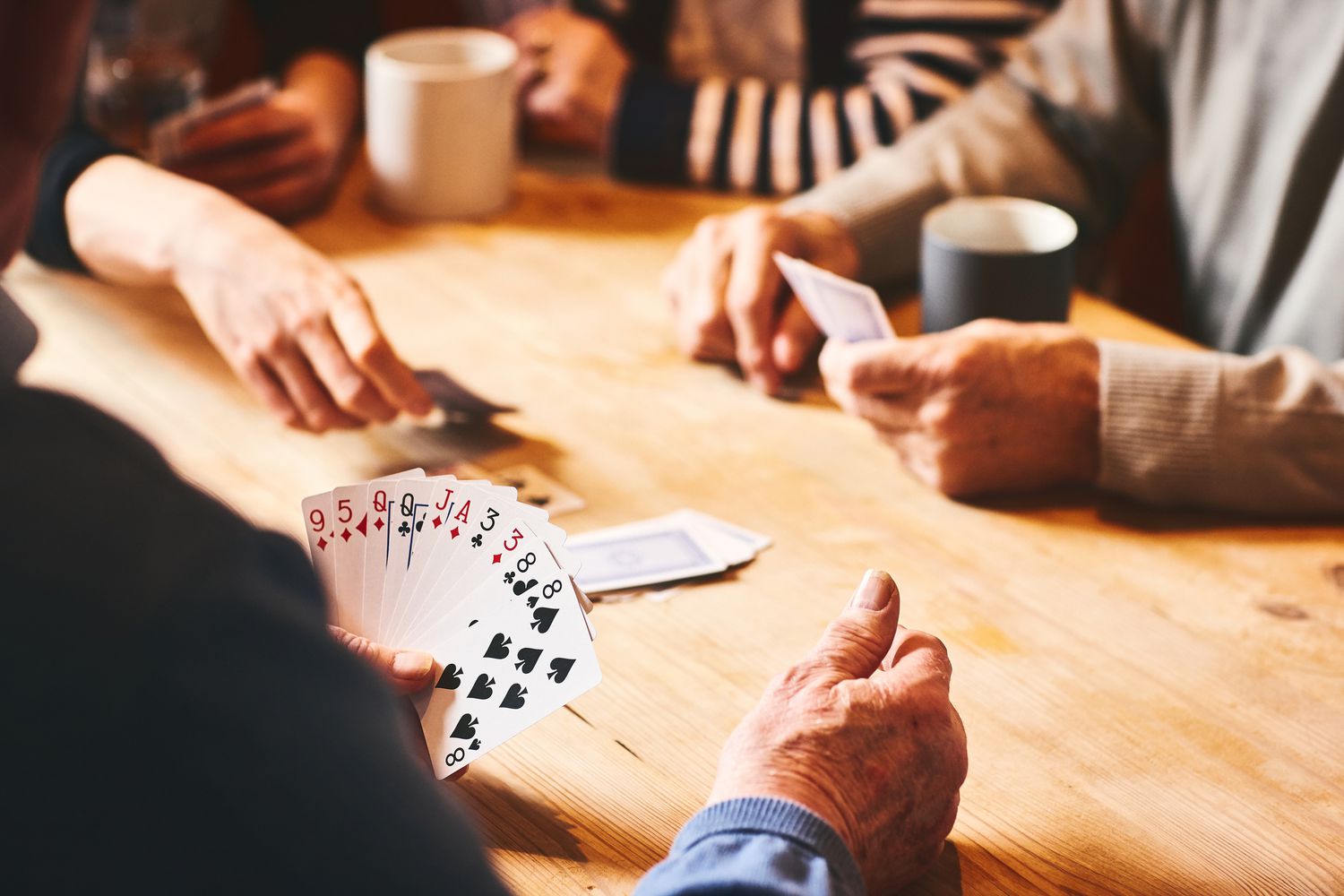

Few inventions are as deceptive in their simplicity as a deck of playing cards. Fifty-two rectangular slips of coated paper, slipped into a pocket or tossed into a drawer, weigh almost nothing and cost only a few dollars. Yet across centuries and continents, these modest artifacts have acted as cultural mirrors, political weapons, workplace distractions, and psychological crucibles.
From the hushed parlors of nineteenth-century Europe to the neon poker tables of Las Vegas and the glowing monitors of early office cubicles, card games have quietly shaped how human beings negotiate trust, manage risk, and spend their solitude. Understanding their history reveals far more than the rules of a pastime; it charts how leisure itself evolved alongside civilization.
The Portable Revolution: How Printed Cards Reshaped Interaction
Long before playing cards reached Europe, they were an innovation of the Tang Dynasty in ninth-century China, where paper money and game pieces frequently intermingled. As trade routes carried these early card sheets through Central Asia and Mamluk Egypt, they underwent continuous visual and structural reinvention. By the late fourteenth century, hand-painted decks arrived in European royal courts as lavish luxury items, gilded with gold leaf and accessible only to aristocrats who could commission master artisans.
The real cultural rupture occurred with the arrival of woodblock printing and movable type. Suddenly, cards ceased to be palace treasures and became everyday commodities. Soldiers, merchants, dockworkers, and tavern keepers could afford a deck of their own. Unlike chess, which demanded heavy, sculpted figures and an elaborate board, cards were radically portable. A game could materialize anywhere two people sat down on an overturned barrel.
With democratization came standardization. The French developed the four suits known across the globe today: hearts, diamonds, spades, and clubs. These symbols were far easier to stencil cheaply than the intricate cups, coins, swords, and batons of traditional Italian or Spanish decks.
Beyond convenience, the court cards captured the political tensions of their era. European monarchs, knights, and legendary heroes were codified on the pasteboard. During the French Revolution, the decks were purged of royalty altogether, temporarily replacing kings and queens with figures representing liberty, equality, and the working classes. Even after the royals returned, the hierarchy of cards remained a subtle arena of social rebellion. The ace, historically the lowest card, was elevated to the highest rank in many traditions, embodying the revolutionary idea that the common foot soldier could topple an emperor.
The Geometry of Solitude: Patience, Solitaire, and the Individual Mind
While cards generally foster social rivalry, their most intimate chapter belongs to isolation. Games of patience, known in North America as solitaire, emerged in the late eighteenth century across Northern Europe. Early folklore associated the practice with cartomancy and fortune-telling, where the alignment of cards was thought to reflect the seeker’s destiny.
During the Victorian era, patience transformed into an approved moral exercise. In an era obsessed with domestic decorum, self-control, and productive leisure, solitaire was viewed as a virtuous way to train the mind. It demanded calm analysis, quiet stoicism, and emotional regulation in the face of random misfortune. Solitary play allowed the practitioner to retreat from social performance into a private, predictable system governed by clear mathematical laws.
That private ritual underwent an unexpected cultural explosion in May 1990, when Microsoft included Solitaire in its Windows 3.0 operating system. Designed by intern Wes Cherry, the digital card game had an explicit corporate objective: to teach an office workforce unfamiliar with personal computers how to use a graphical user interface. By dragging a virtual seven of spades onto an eight of diamonds, millions of employees instinctively learned the drag-and-drop mechanism and fine motor mouse control.
The unintended side effect was profound. Microsoft Solitaire became arguably the most played computer game in human history, establishing the modern template for casual gaming and workplace micro-breaks. It turned the solitary card table into a universal digital reflex, offering an oasis of calm problem-solving amidst the rising tide of desktop bureaucracy.
Bluffing and the American Frontier: Poker as Cultural Mythos
If solitaire represents the orderly, quiet side of the card table, poker is its raw, theatrical counterpart. Originating in the early nineteenth century along the lower Mississippi River, drawing from the French game poque and Persian as-nas, poker traveled north on paddlewheel steamships and west with the Gold Rush.
Poker flourished on the American frontier because it was built on uncertainty, speculation, and self-reinvention. In a boomtown saloon, a person’s family pedigree or social standing meant nothing; the chips in the pot and the look in their eye meant everything. Unlike traditional European trick-taking games, where every hand is played to completion based on card strength, poker introduced the mechanic of bluffing. Winning no longer required holding the best cards. It required convincing your opponent that you did.
This structural shift turned the game into a national metaphor. The concept of the “poker face”—an impenetrable mask masking inner volatility—became a celebrated ideal of frontier composure, modern business strategy, and Cold War diplomacy.
The vernacular of the card room saturated everyday American English. Today, people routinely speak of holding all the cards, laying their cards on the table, calling someone’s bluff, playing the hand they were dealt, or going all in, often without picturing a deck of cards at all. The game provided a vocabulary for navigating competitive capitalism, risk assessment, and interpersonal deception.
The Living Room Arena: Bridge, Canasta, and Suburban Connection
During the middle decades of the twentieth century, cards shifted from dusty saloons and corporate monitors into the living rooms of suburban neighborhoods. No game commanded greater intellectual prestige or social power than contract bridge.
Popularized by figures like Harold Vanderbilt and marketed with brilliant showmanship by Ely Culbertson, bridge became a dominant cultural phenomenon of the 1930s and 1940s. It was rigorous, analytical, and deeply social, requiring partnerships built on complex bidding conventions that operated like miniature private languages. Mastering bridge was a hallmark of sophisticated adult leisure. Weekly games anchored social circles, while local tournaments generated local newspaper headlines.
In the 1950s, the Uruguayan game of canasta sparked an equally feverish craze across the United States. Easier to learn than bridge but rich in defensive tactics, canasta tables appeared in community centers, summer porches, and family dining rooms. These gatherings were not mere idle amusement; they served as vital social glue. In rapidly expanding suburban developments where families often lived far from extended kin, the neighborhood card night offered an unpretentious, reliable framework for building lasting community ties.
Casual family card games like Rummy, Spades, Hearts, and Crazy Eights served an intergenerational purpose. They provided a rare neutral ground where a child, a parent, and a grandparent could sit as equals, bound by identical rules, learning gracious sportsmanship and playful rivalry without screens or generational divides.
Modern Reinventions: The Collectible Tabletop Era
The foundational concept of cards did not freeze in amber with the 52-card deck. In 1993, mathematician Richard Garfield introduced Magic: The Gathering, initiating the collectible card game genre. Instead of dealing from a shared deck, players constructed personalized arsenals from thousands of individual cards, blending deep strategic deck-building with fantasy lore and rare-item collecting.
The explosion of collectible games, followed by Pokémon and modern designer tabletop card systems, proved that the physical card remains remarkably resilient. In an age dominated by high-resolution digital entertainment, younger generations have embraced tabletop games with renewed passion. Modern board game cafes and community leagues rely on physical cards because they satisfy a fundamental human need: the tactile sensation of shuffling, the physical drama of laying a card flat on a wooden table, and the genuine, unmediated presence of opponents sitting within arm’s reach.
The Enduring Balance of Fate and Free Will
Every hand dealt from a deck is an exercise in probability and character. A standard deck can be arranged in roughly $8 \times 10^{67}$ possible sequences—a number so vast that almost every time a deck is thoroughly shuffled, that specific order of cards has never existed before in the history of the universe.
That mathematical reality mirrors human experience. We do not choose the cards dealt to us; blind chance dictates our opening hand. Yet the outcome of the game rests on how we play those cards, when we press an advantage, when we fold, and how well we read the minds of the people sitting across from us. It is this perpetual balance between luck and agency that has kept playing cards at the center of human culture for over a thousand years, ensuring they will remain there for generations to come.

Comments are closed.