
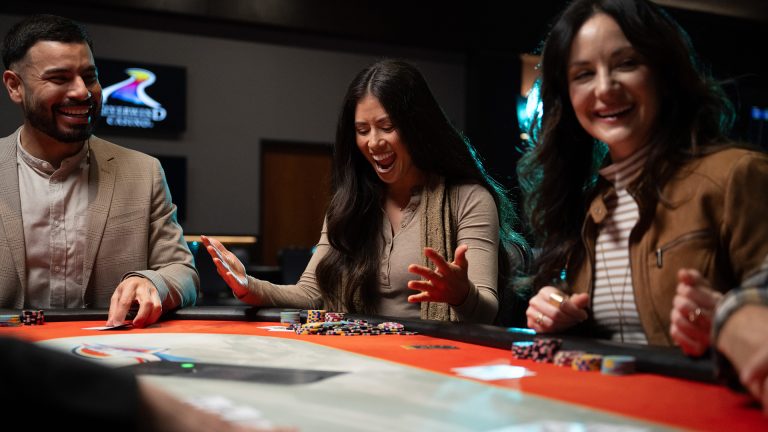

Modern poker strategy is saturated with game theory optimal charts, solver outputs, and mathematically balanced frequencies. Players spend hundreds of hours memorizing preflop ranges and calibrating bet sizes down to the exact percentage of the pot. Yet, when you sit down at a physical card table, an immutable truth reveals itself: poker is not played on a computer simulation. It is contested among human beings burdened with cognitive biases, fragile egos, short attention spans, and varying emotional thresholds.
At a live table, your mathematical execution does not exist in a vacuum. Every decision you make is filtered through the lens of how your opponents perceive you. This collective perception is your table image. A carefully crafted image functions as a strategic lever that bends the math of the game in your favor. It allows you to extract maximum value from passive calling stations, force disciplined regulars into agonizing folds, and orchestrate bluffs that should never work on paper.
Building and manipulating a profitable table image requires more than playing solid cards. It demands an acute understanding of human psychology, deliberate behavioral control, and the tactical discipline to exploit the very assumptions your opponents make about you.
The Psychology of Table Image: How Opponents Profile You
Human beings are hardwired to make quick judgments using mental shortcuts. In psychology, this process is known as thin-slicing: observing a small slice of an individual’s behavior and automatically constructing a broad narrative about their entire personality. At a poker table, where information is scarce and costly, players rely heavily on these shortcuts to classify their tablemates within minutes of sitting down.
Before you have played a single hand to showdown, your opponents have already assigned you a preliminary profile based on ambient cues:
-
Age and Demographics: A young player wearing a hoodie, noise-canceling headphones, and mirrored sunglasses is instantly tagged as an aggressive, mathematically oriented internet grinder. Conversely, an older recreational player in casual vacation attire is reflexively assumed to be cautious, passive, and risk-averse.
-
Physical Posture and Chip Handling: Smooth, effortless chip tricks and crisp card protection communicate comfort and high volume. Fumbling with chip stacks, counting out bets slowly, or repeatedly asking the dealer whose turn it is signals inexperience or distraction.
-
Table Talk and Social Engagement: Chatty, expressive players who crack jokes and talk about outside sports are categorized as recreational gamblers out for an evening of fun. Silent, stoic players who stare down opponents during hands are treated as serious threats.
These superficial initial impressions represent your baseline image. The amateur accepts this baseline passively, letting opponents dictate the terms of engagement. The sophisticated player recognizes that these initial prejudices can be confirmed, subverted, or weaponized to control future action.
Engineering Archetypes to Dictate Action
A winning table image is rarely about looking like an unstoppable poker genius. In fact, cultivating an image of calculated perfection is often counterproductive because it prompts opponents to play tighter, fold marginal hands, and avoid entering pots with you. The most profitable images are those that project specific, exploitable vulnerabilities, encouraging your opponents to make mistakes they feel comfortable making.
The Rock: Projecting Extreme Conservation
When you project the image of a conservative, cautious player who only enters pots with premier holdings, opponents afford you immense respect whenever you show aggression.
You build this perception during the first three or four orbits of a session by folding persistently, surrendering speculative hands from early position, and showing down only top-tier value when you reach a river. Once the table accepts the narrative that you are a tight-passive rock, your continuation bets and river raises become terrifying to everyone at the felt.
You can then systematically steal blinds, raise light against wide opening ranges, and run triple-barrel bluffs on scary board textures. Opponents will lay down top-pair holdings with good kickers, comforting themselves with the belief that they made an exceptional fold against your supposed monster.
The Maniac: Manufacturing Action for Profit
On the opposite end of the spectrum is the deliberate action-junkie image. By straddling frequently, making larger-than-normal preflop open raises, splashing chips into multi-way pots, and engaging in energetic table banter, you convince the table that you are reckless, impatient, and driven by ego.
The strategic upside of this perception is enormous:
-
Opponents widen their calling ranges substantially, eager to catch you stepping out of line.
-
Players stop attempting to bluff you, assuming you will never fold a pair.
-
Your value bets get paid off at a remarkably high frequency, even on dry or coordinated boards where an observant player would normally fold.
The art of deploying the wild image lies in maintaining strict mathematical discipline beneath the theatrical exterior. While appearing loose and undisciplined, you select your actual spots with surgical care, reserving your largest investments for situations where you possess an undeniable mathematical advantage.
The Disproportionate Power of the Showdown Resume
In a standard live cash game or tournament, fewer than fifteen to twenty percent of dealt hands reach a physical showdown where hole cards are turned face-up on the felt. Because cards are concealed for the vast majority of the session, the hands that are actually revealed carry immense psychological weight.
Your showdowns construct your public resume. If you play fifty hands without showing a single card and then finally reveal a cold bluff with seven-high, the table will not remember the forty-nine quiet folds. They will remember the seven-high bluff. That single exposed hand will color every action you take for the next two hours.
Smart players treat every showdown as an intentional broadcast:
Strategic Advertising
Early in a session, it is often profitable to manufacture a small, controlled showdown purely for promotional purposes. For instance, you might execute a modest, two-street bluff in a small pot against a player who is likely to look you up with second pair. When you are called and forced to table your missed draw, you lose a handful of chips, but you gain something vastly more valuable: undeniable proof that you are capable of betting without a made hand.
For the rest of the evening, that visual memory sits in the front of your opponents’ minds. When you eventually flop a set or turn an nut straight against those same players, they will recall that earlier bluff, talk themselves into a hero call, and pay you off in a massive pot.
The Controlled Muck Versus the Voluntary Reveal
Most players habitually muck their cards when they win a pot uncontested or when an opponent folds to their river bet. In many cases, silence is the correct tactical play, keeping opponents in the dark.
However, voluntarily showing one or both cards can alter table perception instantly. Flashing a single ace after pushing an opponent off a river bet plants a seed of doubt: did you have top pair with a dominant kicker, or were you using the naked ace as a bold bluff? Showing a monster after taking a bizarre, non-standard betting line cements the idea that your unorthodox plays are always backed by absolute value. Use the voluntary reveal sparingly, treating it as a calculated psychological intervention rather than an emotional release.
Reading the Room: Seating Dynamics and Table Friction
A table image does not exist in an isolated bubble; it is entirely relative to the specific seating alignment and the collective emotional temperature of the room. A style that terrorizes a table of conservative, retired businessmen will completely unravel against a lineup of aggressive, young tournament regulars.
Positional Synergy and Target Selection
Your image operates through the mechanics of position. The players seated immediately to your left and right dictate the practical value of your table reputation:
-
The Calling Station to Your Right: This player enters too many pots and hates folding. You do not need an elaborate bluffing image against this profile. Your image should simply be that of a standard participant, while you widen your value-betting range and eliminate bluffs entirely.
-
The Aggressive Regular to Your Left: This player has direct position on you and will actively look to exploit your perceived tendencies. If they view you as tight and defensive, they will float your flop bets and three-bet your opens relentlessly.
To neutralize an aggressive player with position, you must project calculated unpredictability. Check-raising with balanced ranges, four-betting light preflop, or taking aggressive lines out of position forces them to abandon their predatory posture and treat you with caution.
Exploiting Table Friction
Live poker tables frequently develop internal micro-narratives. Two players might enter into a quiet personal feud after an early confrontation, trading verbal jabs, raising each other’s blinds, and engaging in erratic ego battles.
An observant player recognizes that during these periods of friction, the table’s collective attention shifts away from everyone else. When the spotlight is focused on an escalating conflict between two opponents, your personal image fades into the background. This psychological shadow is the perfect environment to execute low-risk steals, build cheap pots with speculative hands, or position yourself to pick off the loser of the feud when their emotional discipline finally snaps.
Shifting Gears: Breaking the Mold Before Opponents Adjust
The fatal mistake that turns a winning player into a break-even grinder is becoming captive to your own image. If you spend three hours playing like an impenetrable vault, observant opponents will eventually figure out that your river raises are always unbeatable. Once they adapt, they will stop paying off your monster hands, reducing your win rate to a trickle.
Success at high levels hinges on the ability to shift gears—deliberately abandoning your established style the exact moment your opponents have finalized their blueprint to counter it.
The dynamic unfolds across distinct phases:
-
Phase One (Establishment): You spend the early stages of a game cultivating a distinct identity, such as playing tight, disciplined poker and showing down only premium hands.
-
Phase Two (Exploitation): You begin leaning into the benefits of that image, utilizing the perceived respect to take down uncontested pots with aggressive bluffs.
-
Phase Three (The Turning Point): You sense that your opponents are growing skeptical. They are taking longer to fold, leaning back in their chairs, and looking at you with suspicious curiosity.
-
Phase Four (The Inversion): You slam on the brakes. You stop bluffing entirely, tighten your range, and let your opponents trap themselves by making aggressive hero calls against what they believe is an overextended bluffer, only to run headfirst into the very nuts they thought you didn’t have.
This fluid metamorphosis keeps you perpetually one step ahead of the table’s learning curve. While your opponents are playing against the player you were forty-five minutes ago, you are already operating under an entirely new set of strategic priorities.
The Hazard of Fancy Play Syndrome Against Unobservant Opponents
Image manipulation is an advanced weapon, and like all advanced weapons, it can easily inflict self-harm if mishandled. The most common pitfall for developing players is falling victim to Fancy Play Syndrome (FPS)—executing complex, multi-layered strategic plays that require your opponent to be thinking on an analytical level they simply do not occupy.
In poker theory, players operate across varying cognitive levels:
-
Level 0: The player does not understand the rules or basic hand rankings.
-
Level 1: The player thinks exclusively about their own two cards: “Do I have a good hand?”
-
Level 2: The player thinks about what you have: “What does my opponent have?”
-
Level 3: The player thinks about what you think they have: “What does my opponent think I have, and how are they reacting to it?”
Table image is completely irrelevant against a Level 1 thinker. A recreational calling station who only cares about whether their two hole cards made a pair is entirely blind to your carefully constructed tight table image. They do not care that you have folded for two hours, they do not notice your balanced sizing, and they do not comprehend that the board runout strongly favors your perceived range. They have an ace in their hand, and they are going to call your bet.
Attempting to run sophisticated, image-based bluffs against players who are not actively paying attention to your tendencies is financial suicide. Image engineering should be reserved almost exclusively for Level 2 and Level 3 thinkers—opponents who are consciously watching you, looking for patterns, and trying to outthink the narrative you are feeding them. Against unobservant players, strip away the psychological theater and revert to fundamental, unglamorous, value-heavy poker.
Winning poker is not a sterile contest of cold statistics, nor is it an exercise in chaotic guesswork. It is the deliberate intersection where rigorous mathematical strategy meets the fluid, psychological reality of the humans seated around the felt. By mastering the subtleties of physical presence, controlling the narrative of your showdowns, respecting table dynamics, and shifting gears with precision, you turn perception into profit. Your opponents will continue to believe they are playing the game on their terms, completely unaware that they are merely acting out roles in a script you have already written.

Comments are closed.